Janez Demšar, September 11, 2025
Testing a Lesson on Asian Climates
As part of DALI4US, a project connected with Pumice, we are preparing Four Excursions into AI, covering four topics from data analysis. One of them will be clustering.
Among our existing lessons, we did not yet have one that would be suitable for the second triad of primary school, usable in schools outside Slovenia, and would not require (too much, or any) work with computers. The closest was the clustering of climates, so we prepared a version that does not (necessarily) require a computer.
The existing lesson on clustering climates — more precisely, clustering places according to their annual patterns of temperature and precipitation — dealt with European capitals. These are a tricky case: European climates differ noticeably mostly in temperature, which is simply higher in some places and lower in others, more or less throughout the year. What we were teaching in schools was somewhat far-fetched. Moreover, every fifth grader already knows that Athens is warmer than Helsinki, and that Greece has a Mediterranean climate because … well, because of where it is.
So we chose another continent: Asia. The first advantage is that the climates there differ much more substantially than those in Europe. The second is, of course, that an ordinary student does not know where Luang Prabang is, so they cannot already know, without looking at the data, what kind of climate it has because … well, because of where it is.
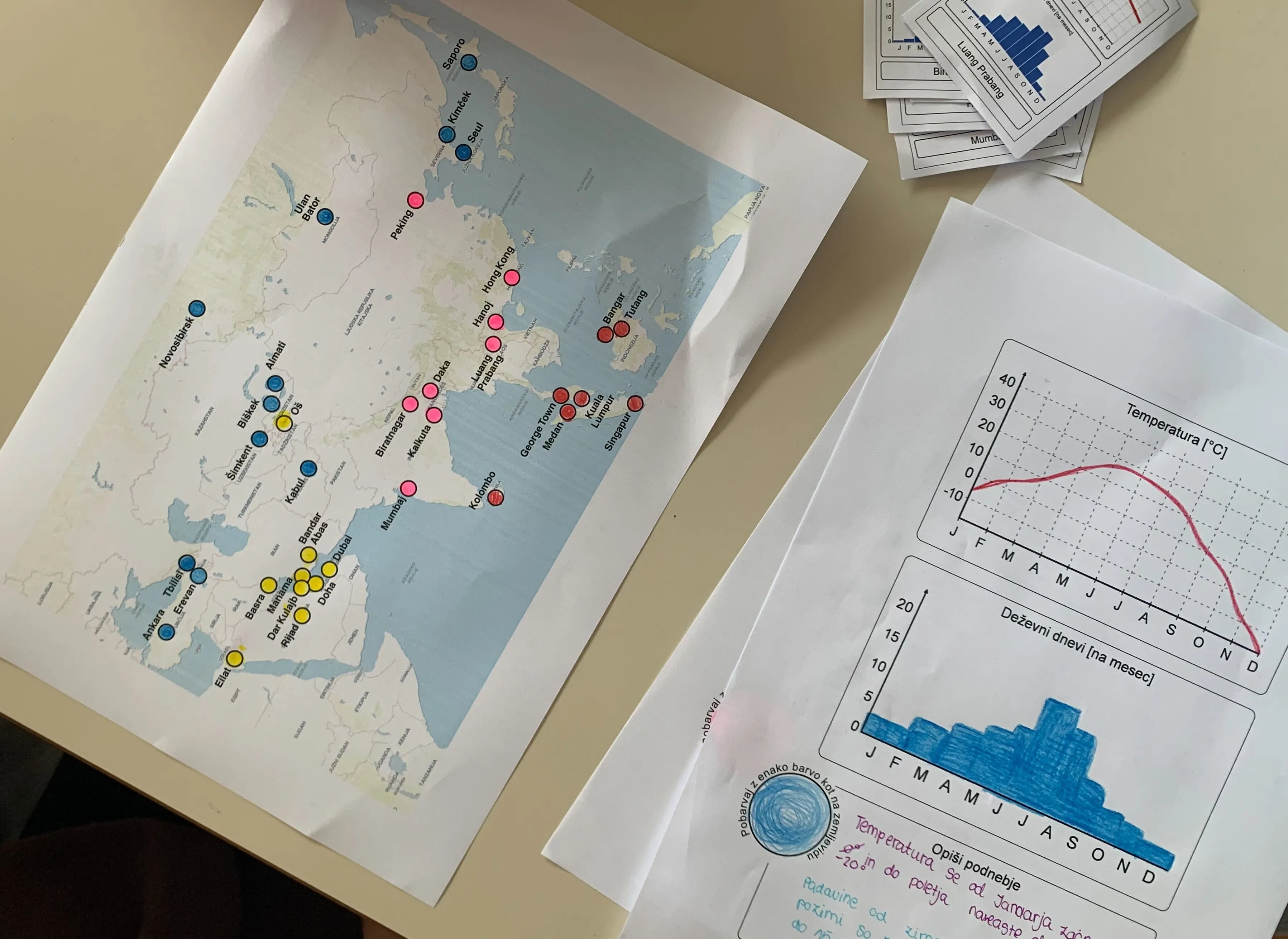
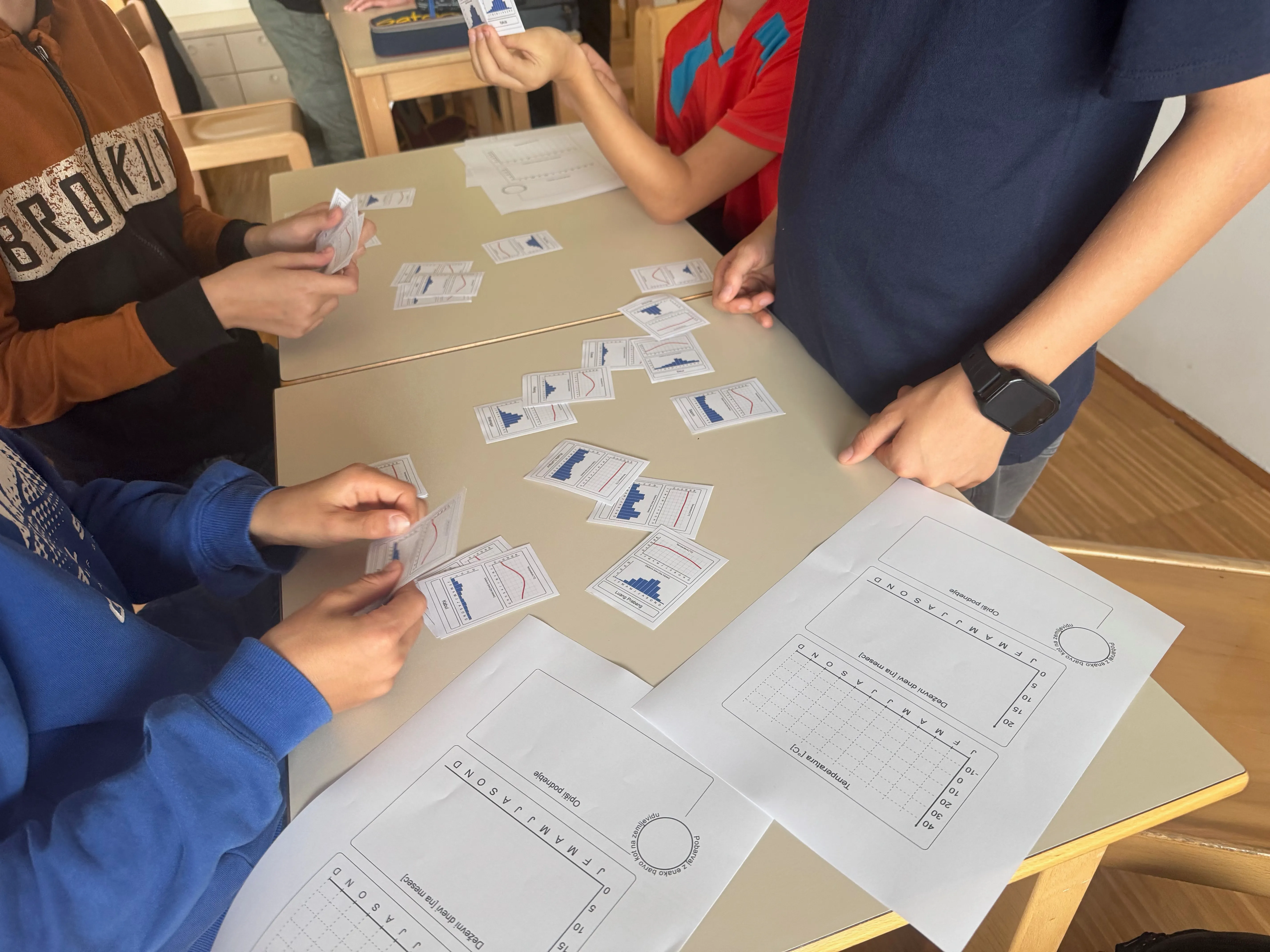
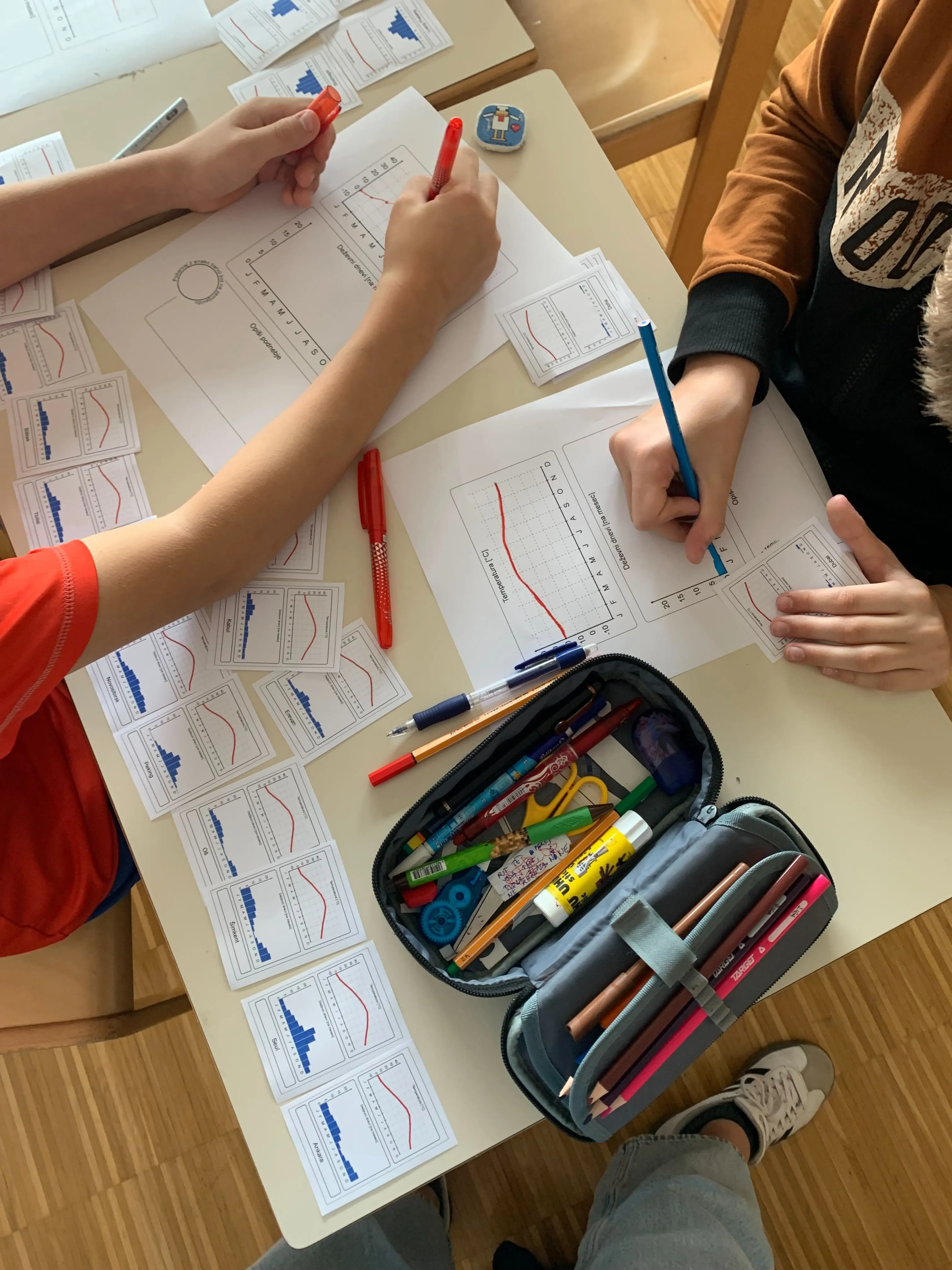
Since we wanted an activity that could work without computers, we prepared cards; we are already experts at that. :) Each card contains a climate graph for an individual location, and the students’ task was to divide them into four groups. Then each student took one pile, found the corresponding locations on a prepared map, and marked them in their own color. In addition, they had to draw an average climate graph for their locations and describe it.
How did it work in the classroom? With a word that often appears in descriptions of climates: temperate. The main problem was that we ran out of time, so we did not manage to complete the lesson. But we saw enough to know that it works, and we will dare to propose it as one of the four excursions. We will report later on how it performs in broader testing.