Janez Demšar, May 8, 2026
Houses Without Computers
The Slovenian Houses activity had been bothering us for quite some time. We’ve finally managed to redesign it and test the new version successfully.
Slovenia has different climates - harsh, dry and windy Carst region, snowy Alps and the warmer Pannonian plain. The houses in these regions are different too. The activity is about classifying the houses into groups based on their characteristics and then locating them on a map.
One of the lessons we’ve learned over several years of developing Pumice is that it’s better to avoid computers whenever possible. At least in primary school. And if you do use them, it’s better to rely on ready-made interactive components embedded in web pages rather than on the desktop version of Orange. Teachers are intimidated by it, no matter how much we try to convince them that it’s easy to use.
This is even more true when the computer only appears at the very end to demonstrate that “a computer can do this too.” Especially when the algorithm used by the computer is completely different from what the students have been doing, so we can’t even explain how the computer arrives at its answer.
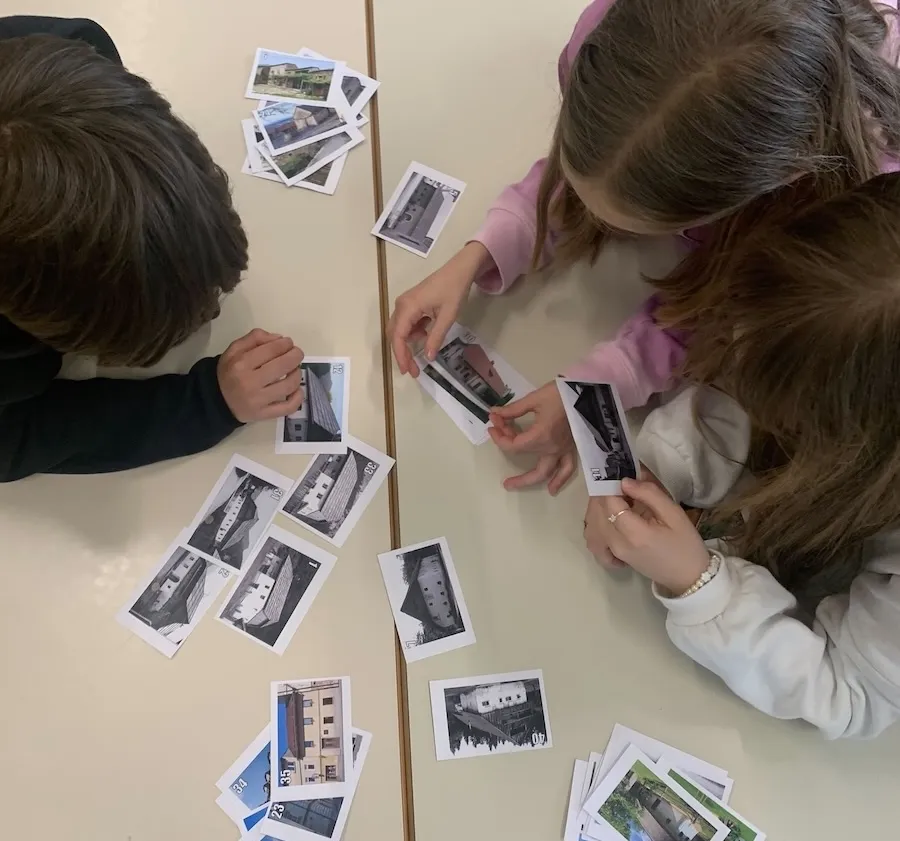
Until now, the Slovenian Houses activity worked like this: students sorted cards showing different houses into piles — Alpine, Pannonian, Karst, and others — and entered their classifications into the computer. We then used Orange to see which group had performed best, which houses they had classified incorrectly, where those houses were located on a map, and how the computer would classify them.
To be honest, this was mainly a nice demonstration of how Orange can analyze data about the accuracy of different groups. It worked well — but only when we were there. Orange experts. We don’t actually know whether anyone else ever tried to run the activity this way.
We wanted to remove the computer, keep the competitive element, and perhaps strengthen the connection with geography.
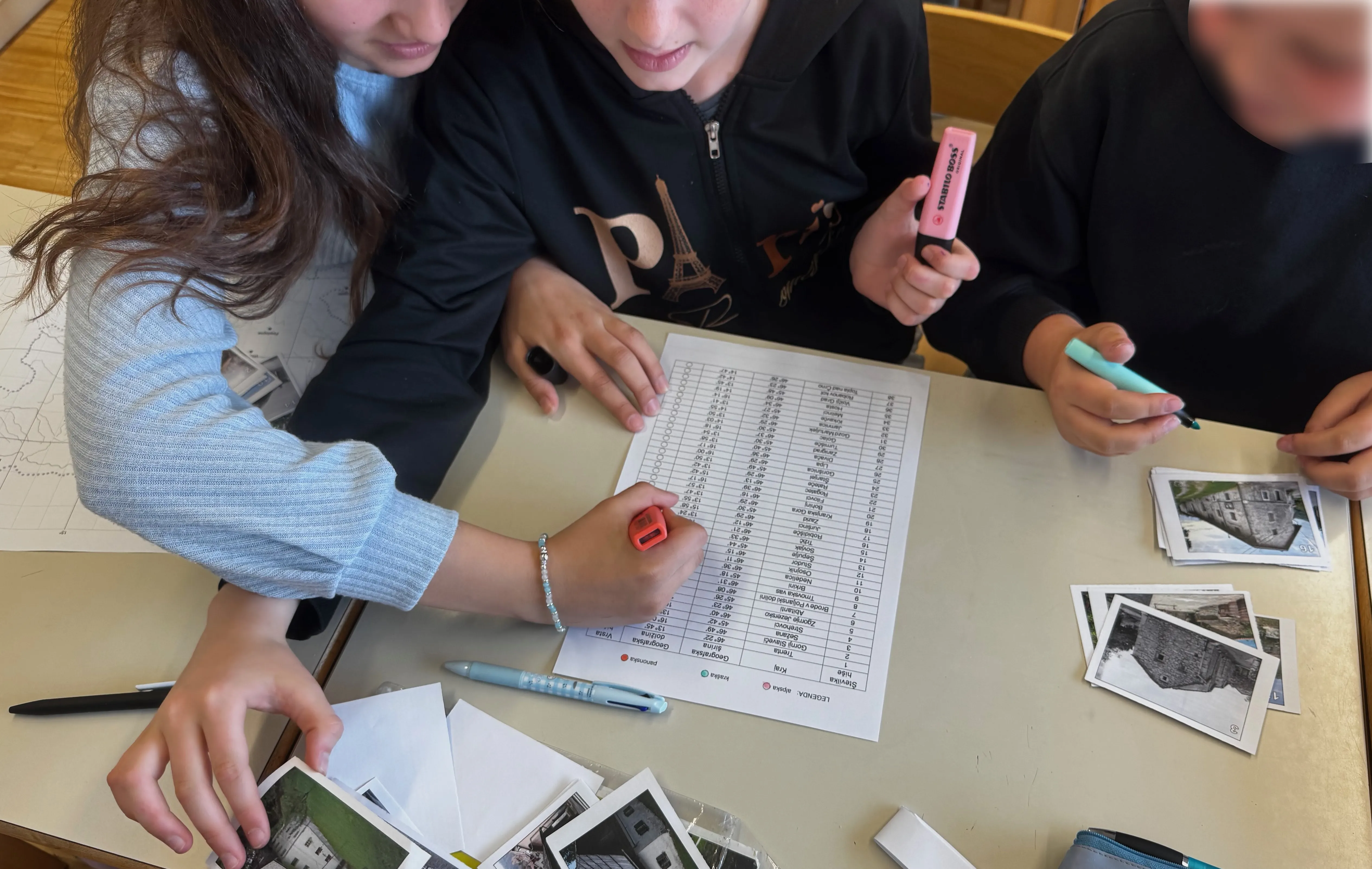
So we designed a new version and went to test it at Alojzij Šuštar Primary School in Ljubljana.
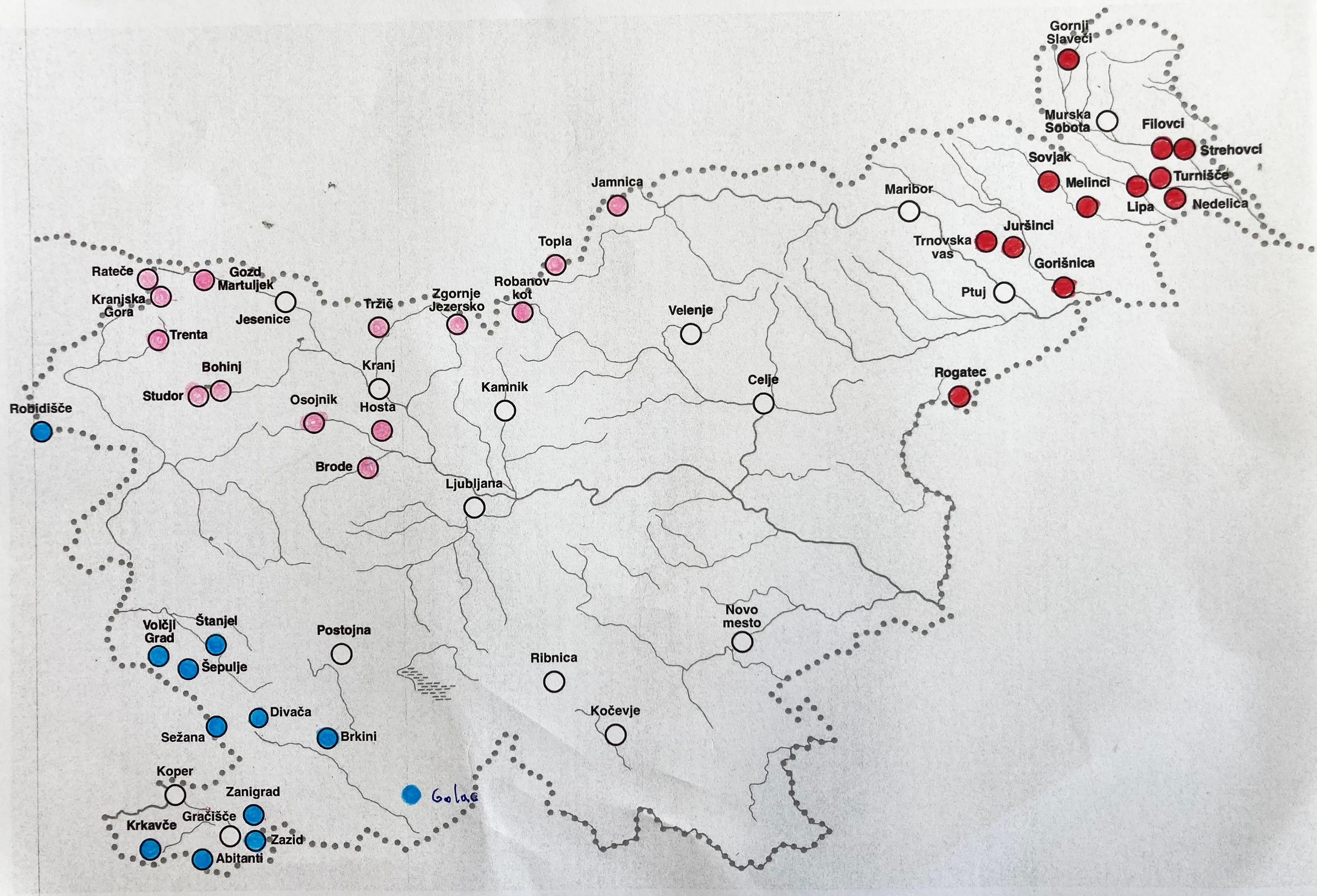
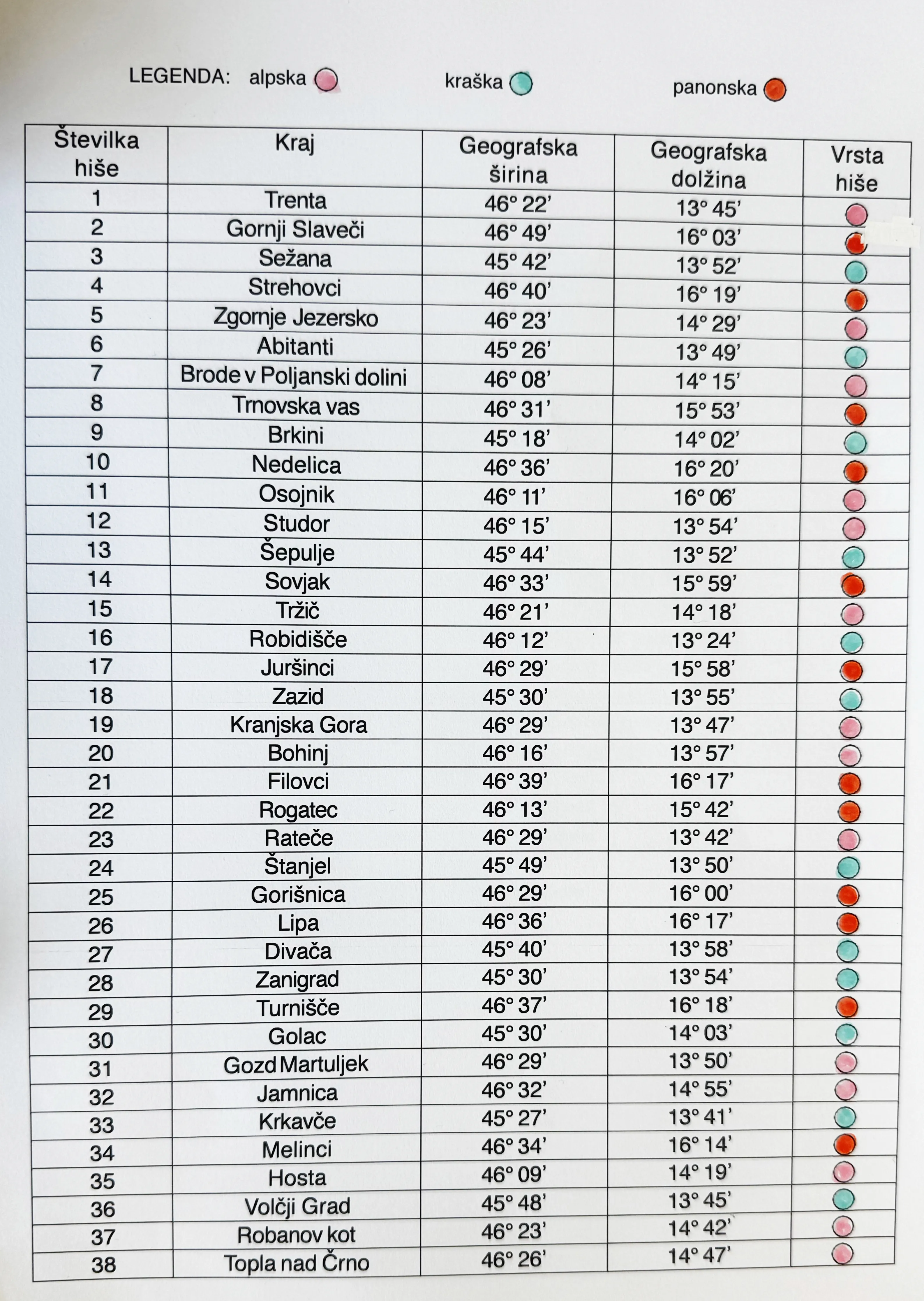
The new activity works like this. Students, working in groups of three, still begin by sorting the cards, but now into just three categories. We removed the “ordinary houses,” whose only purpose had been to fill the central and southeastern parts of Slovenia. Each member of the group then takes responsibility for one pile and one colored pencil. Using a table listing all the houses, they first color the circles in the legend and then the circles in the rows corresponding to each individual house.
Each group receives a map. We experimented with three different versions. Some groups were given maps with the locations of the houses already marked. Others had to use the geographical coordinates provided in the table. The third group received tables without coordinates and had to look up the locations in an atlas or using online maps. The latter turned out to be too demanding and too time-consuming for classroom use. A better approach would be to omit the locations of only a few places and use those as a final challenge.
The groups then received answer strips that allowed them to check whether they had classified the houses correctly. The students found these particularly engaging — and rightly so, because they’re quite a clever little invention.
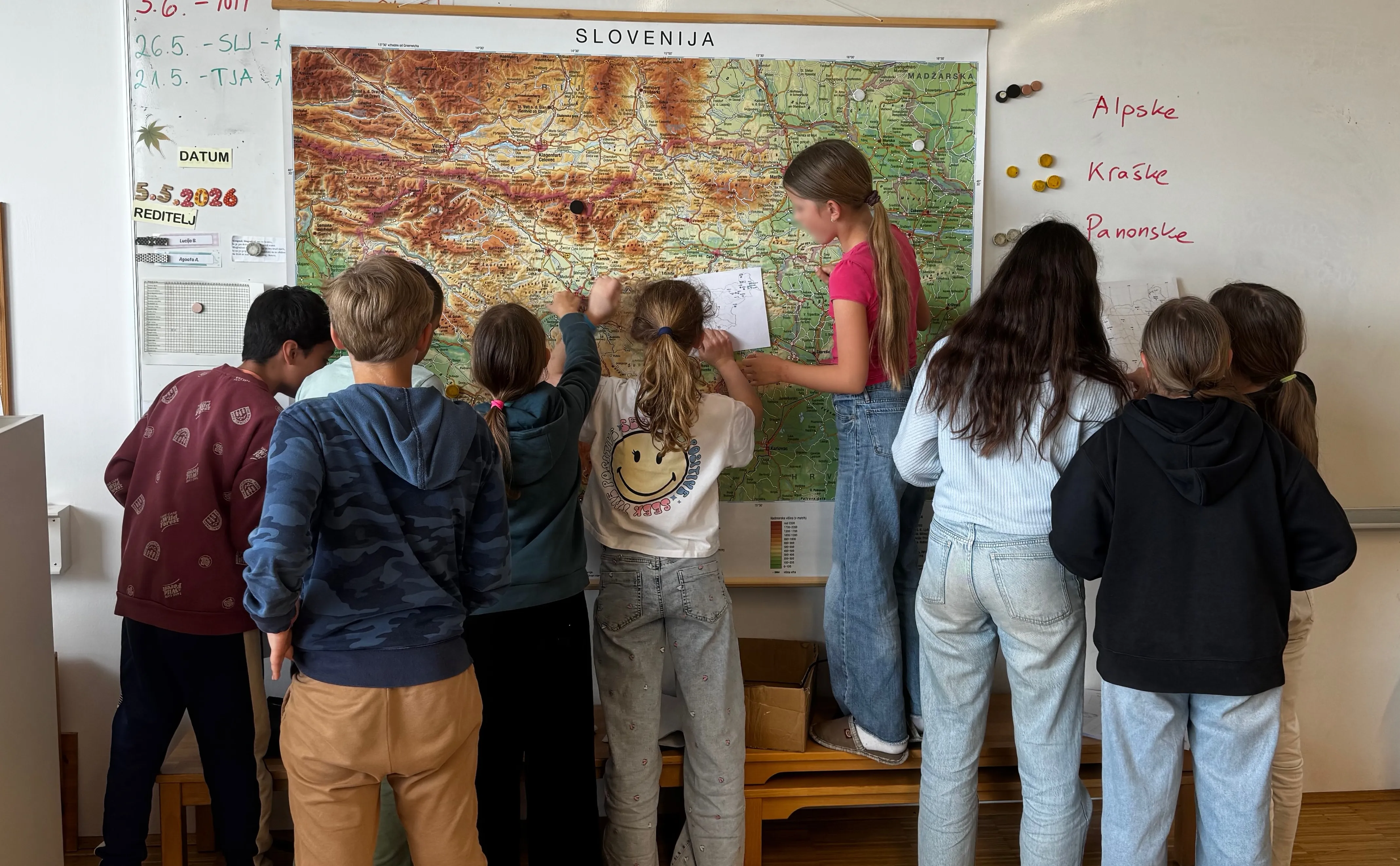
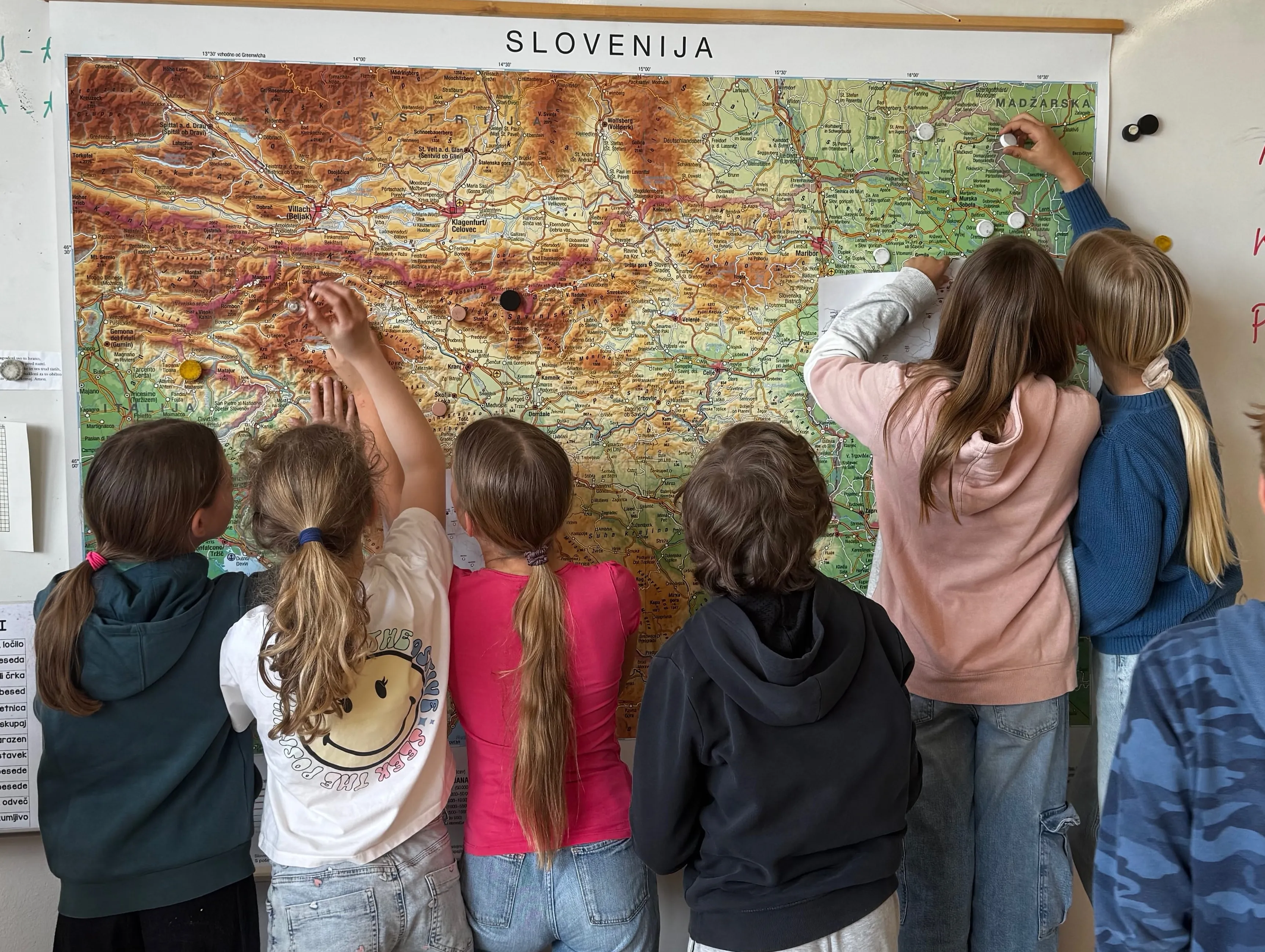
Quite spontaneously, following a suggestion from the teacher hosting us (Irena, whose surname happens, not entirely by coincidence, to be the same as the author’s), we hung a large map at the front of the classroom and prepared magnets in three colors, one for each type of house. The teacher called students to the front, assigned each of them the name of a place, and they had to find it on the map and place a magnet of the appropriate color there.
This final part was especially enjoyable. There is something in us (biochemists would probably know the hormone responsible) that gives us a feeling of satisfaction when we search and search for something — and finally find it.
And it doesn’t have to be a place on a map. The same feeling comes when you’ve been searching for the right way to teach a lesson, try it in a real classroom, and realize that you’ve finally found it.